I’m Back in Brazil! Brazilian Portuguese Listening Practice
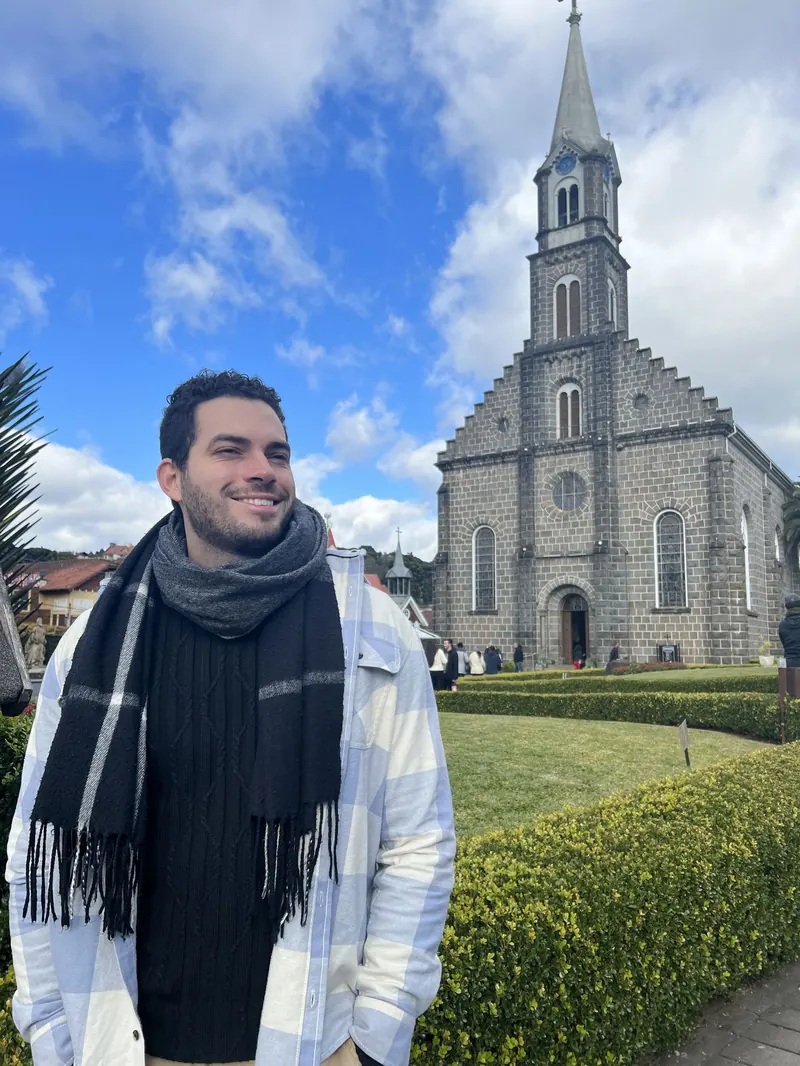
By Bruno Lopes · Brazilian Portuguese teacher
Host of I Speak Portuguese · Updated
Meet Bruno and the teaching teamThe episode’s chapter list moves from Bruno’s return to Brazil into everyday topics and a short listening strategy. You can follow the story without catching every detail. First notice the subject; then use the chapter that interests you to listen again.
The phrases and practice sentences below are additional learning examples based on the episode’s topics, not quotations from the video.
Pick up the topic before the details
On your first listen, try to answer only these questions: Where has Bruno returned? Where does he live? Which parts of everyday life does he compare or describe? The episode moves through Brasília, transport, climate, and travel, so those topics can help you follow the conversation.
If a sentence goes by too quickly, keep listening. A familiar word in the next sentence may make the earlier idea clearer. After the video, return to the chapter list and replay one short section.
Useful phrases for talking about a return
| Portuguese | Meaning | Practice example |
|---|---|---|
| Voltei para o Brasil. | I came back to Brazil. | Voltei para o Brasil este ano. |
| Morei na Ásia. | I lived in Asia. | Morei na Ásia por um tempo. |
| Estou me acostumando. | I’m getting used to it. | Estou me acostumando com a cidade. |
| O transporte é diferente. | Transportation is different. | O transporte é diferente em cada cidade. |
| O clima mudou. | The climate changed. | O clima mudou desde que cheguei. |
These are model sentences to adapt to your own experience. Notice voltei, the past form of voltar. It describes a completed return. Estou me acostumando describes a change that is still happening.
Practice listening without translating every word
- Listen once for the main topic. Do not pause to look up every unfamiliar word.
- Choose a short chapter and write down two or three words you recognize.
- Replay the same section. Use the situation and the familiar words to work out the main point.
- Turn on captions if they help you check what you heard, then listen once more while focusing on the audio.
Captions are a useful support, not a failure. The goal is to build a direct connection between a Portuguese sound and its meaning, one familiar phrase at a time. Keep the sections short enough that you can repeat them comfortably.
Describe your own city
Use the episode’s themes to make a short comparison. Here is a new practice example:
Voltei para minha cidade depois de morar fora. Estou me acostumando com o clima e com o transporte. Gosto de conhecer lugares novos a pé.“I came back to my city after living abroad. I’m getting used to the climate and transportation. I like discovering new places on foot.” Change the details so the sentences are true for you, then say them aloud without reading.
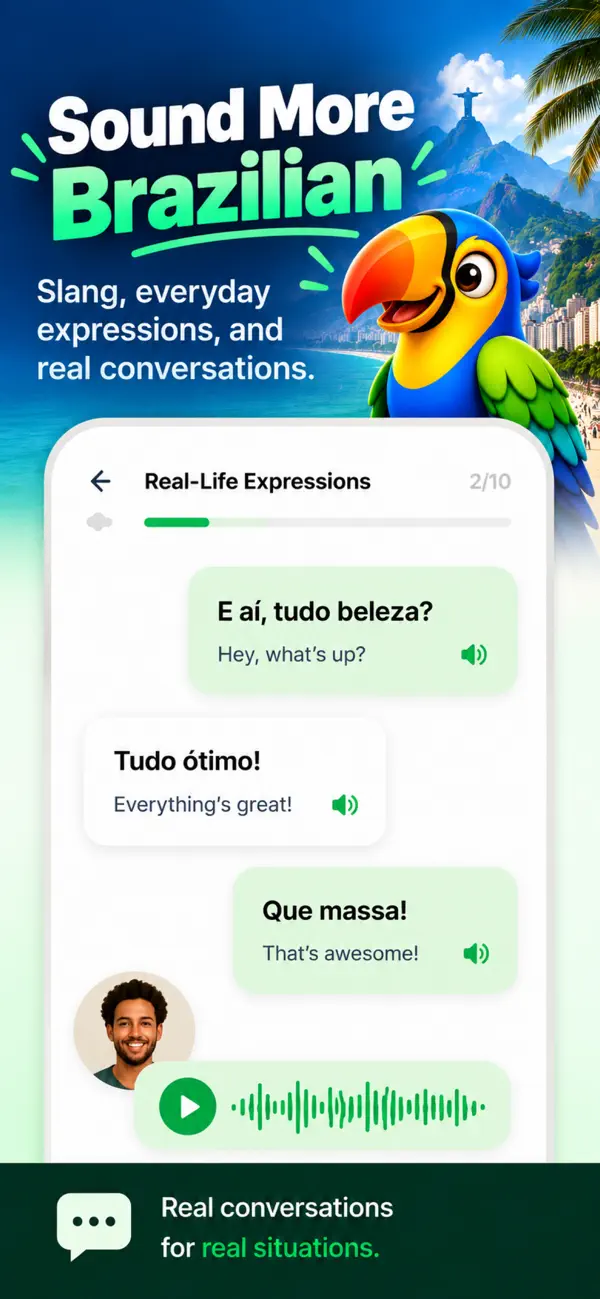
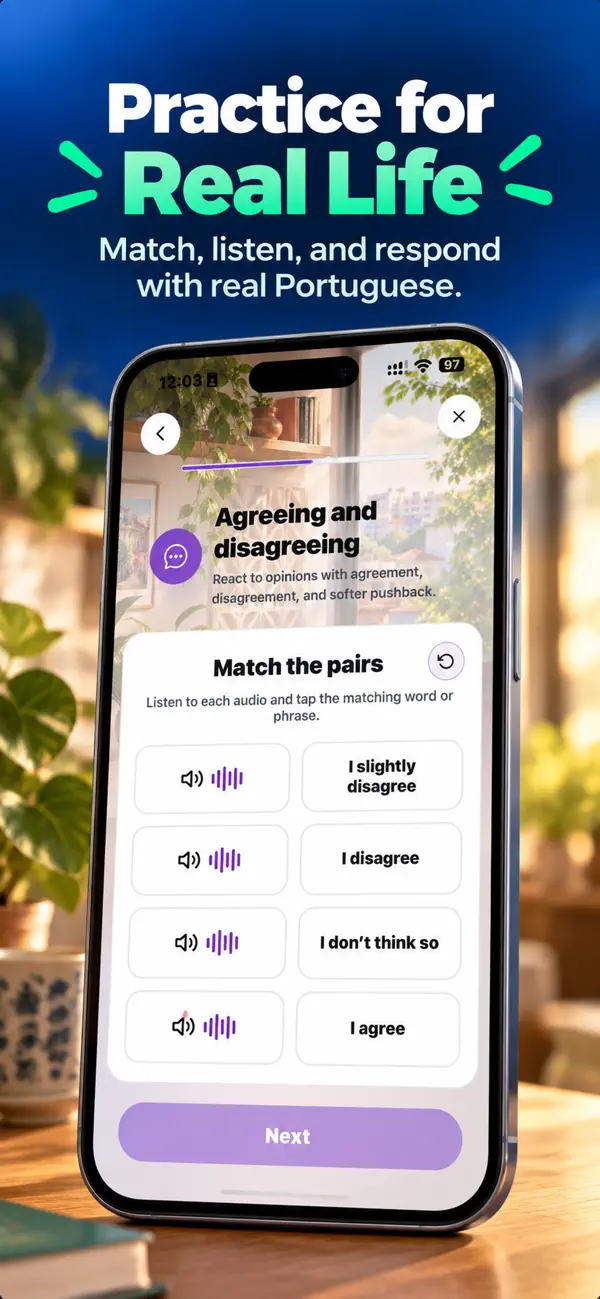
Continue with the Real Life Portuguese app, which gives you short practice with everyday expressions. If you want feedback on how you speak, you can also meet a teacher in a trial lesson. The audio version is available through the I Speak Portuguese podcast on Spotify.
Frequently asked questions
How can I understand Brazilian Portuguese when it sounds fast?
Listen first for the topic and situation, then replay a short section and notice the words that carry the meaning. You do not need to understand every word on the first listen.
Should I use subtitles when practicing Portuguese listening?
Use them when they help you learn or make the video accessible. You can also listen once without reading, then turn captions on to check what you heard.
What is this episode about?
Bruno talks about returning to Brazil after living in Asia, life in Brasília, transportation, climate, international flights, and ways to practice listening without depending too much on subtitles.