10 Everyday Brazilian Portuguese Expressions

By Bruno Lopes · Brazilian Portuguese teacher
Host of I Speak Portuguese · Updated
Meet Bruno and the teaching teamTen useful expressions to practice
Use this original set to warm up before listening. It is a separate practice list, not a reconstruction of the episode's contents.
| Expression | Common meaning | Original example |
|---|---|---|
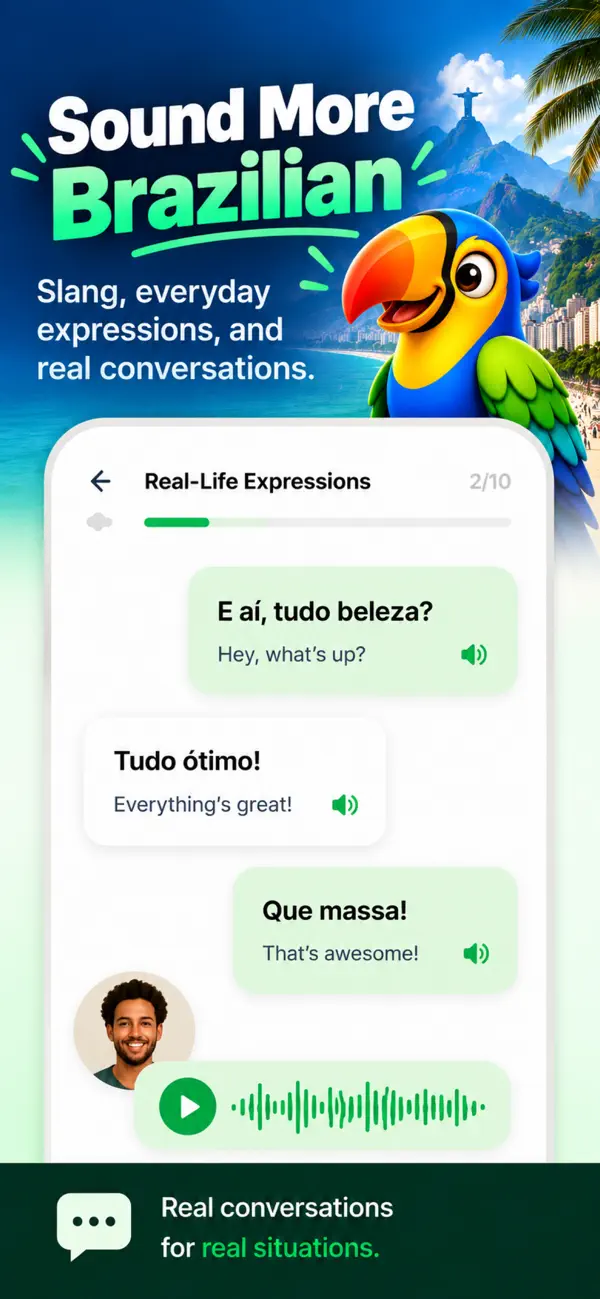
| Tudo bem? | How are you? / Is everything okay? | Oi, tudo bem? |
| E aí? | What's up? / How's it going? | E aí, pessoal? |
| Beleza? | All good? / Okay? | A gente se encontra às oito, beleza? |
| Que legal! | How nice! / That's great! | Você vai viajar? Que legal! |
| Que massa! | That's awesome! | Você aprendeu a surfar? Que massa! |
| Bora? | Shall we go? / Are you in? | Bora tomar um café? |
| Valeu! | Thanks! / Cheers! | Valeu pela ajuda! |
| Pois é. | Yeah. / That's right. / I know. | Pois é, hoje está muito quente. |
| Imagina! | No problem! / Don't mention it! | — Obrigado! — Imagina! |
| Tranquilo. | No problem. / It's all good. | Desculpa pelo atraso. — Tranquilo. |
Pay attention to context and tone
Short expressions often carry more than their dictionary meaning. E aí? is a casual greeting; it is not the usual choice for a formal introduction. Valeu is informal thanks, while obrigado or obrigada can fit a wider range of situations. A rising voice can turn Beleza? into a quick check that a plan is okay.
Pois é changes with the conversation: it can show agreement, acknowledgment, or a reflective “yeah.” Imagina can respond to thanks as “no problem,” while tranquilo can reassure someone that a small issue is fine. Listen to what comes before and after the expression.
Use a three-pass listening routine
- Listen once without pausing. Identify who is speaking and the broad situation.
- Listen again for expressions. Write down words or short phrases you hear more than once or notice from the speaker's emphasis.
- Replay a short section. Note the sentence around one expression and whether the tone sounds friendly, excited, neutral, or serious.
If you cannot catch a phrase, keep listening for the idea around it. Familiar words, the speaker's reaction, and the situation can help you make a careful guess. Check against any episode notes or captions that are available.
Make each phrase your own
Choose three expressions from the supplemental list. For each one, write a sentence that fits a situation you might actually encounter. Then say it aloud twice: once slowly for pronunciation and once at a comfortable conversational pace.
- Greeting: E aí? Tudo bem?
- Reacting: Você conseguiu! Que massa!
- Accepting an invitation: Bora, sim!
- Thanking a friend: Valeu pela companhia.
- Responding to thanks: Imagina!
For another focused lesson, compare these with the five phrases in our guide to everyday Brazilian expressions. Keep practicing listening and speaking in the Real Life Portuguese app, book a trial lesson to practice with a teacher, or share a phrase with other learners in the I Speak Portuguese community.
Frequently asked questions
Which expressions are in the 10 Expressions podcast episode?
The public episode listing confirms the topic and seven-minute length, but does not provide the phrase list. The ten expressions on this page are original supplemental examples and are not attributed to the episode.
What are some common Brazilian Portuguese expressions?
Tudo bem?, e aí?, beleza?, que legal, que massa, bora, valeu, pois é, imagina, and tranquilo are useful expressions. Their meaning and tone depend on the situation and the relationship between speakers.
How can I learn expressions from a Portuguese podcast?
Listen once for the situation, replay to catch repeated or emphasized phrases, then note the surrounding sentence and speaker's tone. Review the meaning in context before trying the expression yourself.