Turn a Portuguese Podcast Into Active Practice

By Bruno Lopes · Brazilian Portuguese teacher
Host of I Speak Portuguese · Updated
Meet Bruno and the teaching teamChoose a short segment you can revisit
Pick a few minutes on a familiar topic: food, travel, daily life, or a story. If the full episode feels difficult, begin with a smaller section. Listen while focused rather than using it only as background, and give yourself permission to miss details.
The three-pass listening routine
- Pass one: follow the overall idea. Do not pause for every unknown word. Note the topic, who is speaking, and one thing you think happened or was explained.
- Pass two: listen for anchors. Notice familiar words, repeated phrases, names, time markers, and changes in tone. Write down only a few items worth revisiting.
- Pass three: retell. Pause the audio and explain the main idea aloud in simple Portuguese or English. Then replay a short part and check what you understood.
If the episode has captions, notes, or a transcript, use them after your first attempt to check a question you had. Availability varies by episode. Avoid reading along from the start if your goal is to train listening.
Keep a small listening log
| What I noticed | Your note |
|---|---|
| Main topic | What is this segment mostly about? |
| Words I recognized | Which words helped me follow the meaning? |
| One phrase to keep | What short expression could I use in another situation? |
| Question for next time | What should I listen for on the next replay? |
A useful note is specific. Instead of writing “I understood more,” write “I recognized the speaker was making a plan because I heard amanhã and vamos.”
Use one phrase in your own sentence
Choose a phrase you actually heard and build a new sentence around your life. For example, if you hear vamos conversar (“let’s talk”), you might adapt it to Vamos conversar depois do almoço? (“Shall we talk after lunch?”). This is an original practice example, not a quotation from a specific episode.
Keep a simple study routine so listening connects to speaking and review. Browse our Brazilian Portuguese podcast guide to find listening options, or explore the episode-based lessons on the I Speak Portuguese podcast page.
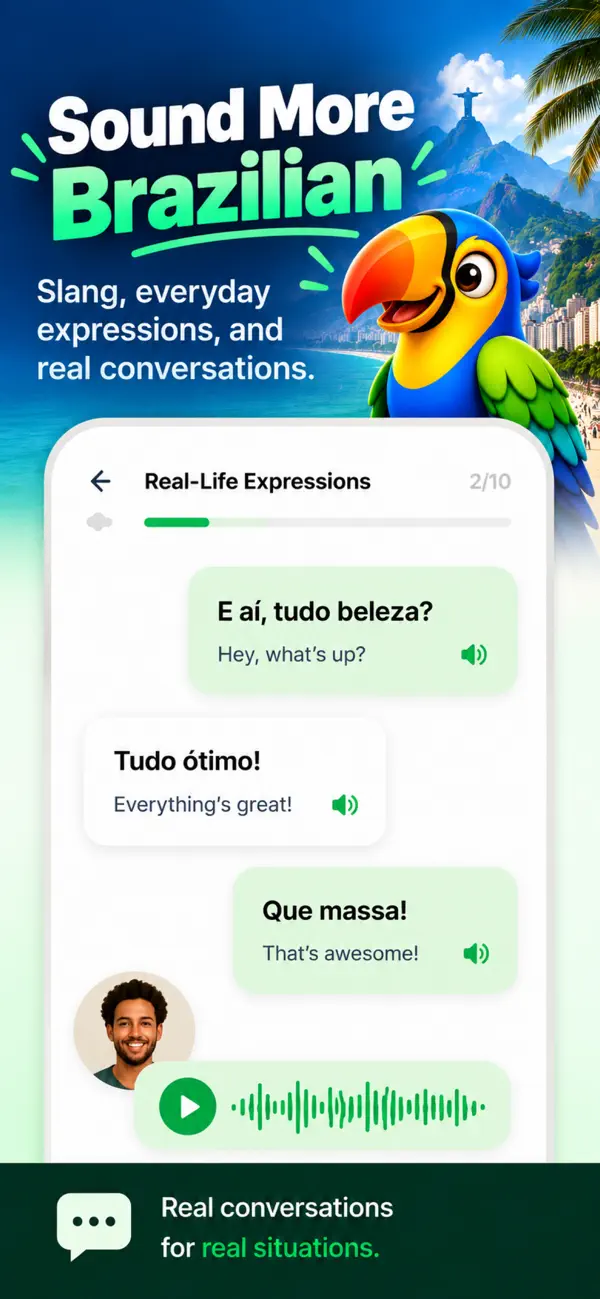
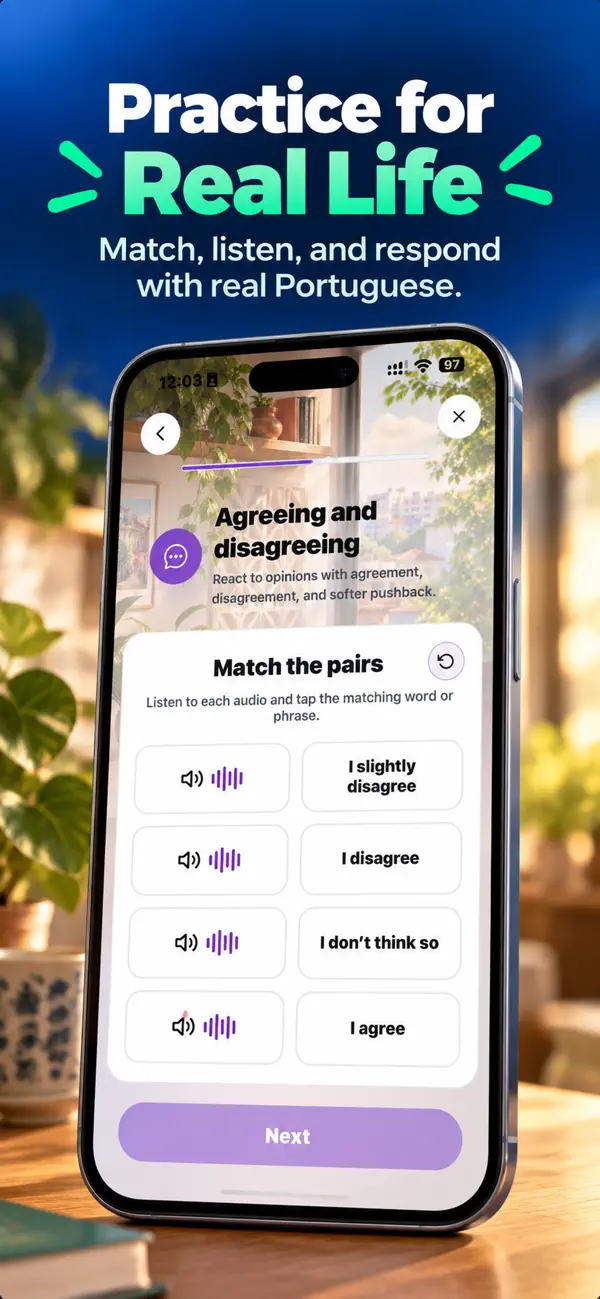
For more guided practice, explore the Real Life Portuguese app or speak with the teaching team in a trial lesson.
Frequently asked questions
Should beginners listen to Portuguese podcasts?
Yes, if you choose short segments with a topic or level that feels manageable. It is normal to understand only the main idea at first; use repetition and supportive materials when available.
How many times should I replay an episode?
Try three purposeful passes over a short segment: for the main idea, for useful details, and for a spoken summary. You can stop earlier if you feel saturated.
Do I need a transcript?
No. A transcript can help when one is provided, but you can still listen for the topic, note phrases you recognize, and summarize what you understood without one.