Is Brazilian Portuguese Too Fast? Test Your Listening

By Bruno Lopes · Brazilian Portuguese teacher
Host of I Speak Portuguese · Updated
Meet Bruno and the teaching teamThe episode description sets one clear goal: test your listening with natural Brazilian Portuguese. Bruno says that understanding most of the video is a strong sign of comprehension. The article’s practice method below is an additional way to make that self-check useful.
Understand the message before counting missed words
After one uninterrupted listen, write a short summary in English or Portuguese. Then check three things:
- Did you recognize the subject and situation?
- Could you follow the speaker’s main point?
- Did you catch a few details, even if some words were unfamiliar?
If you followed the main idea, your listening is doing useful work. A conversation is not a spelling test: you can understand someone without identifying every syllable.
Why familiar words can sound different
In casual Brazilian Portuguese, speakers often connect words and use shorter forms. A learner who expects each word to sound exactly like a dictionary recording may miss a phrase they already know. The examples below are common recognition patterns for practice; they are not quoted from this episode.
| Full form | Casual form you may hear | Meaning |
|---|---|---|
| está tudo bem | tá tudo bem | everything is okay |
| estou em casa | tô em casa | I’m at home |
| para a cidade | pra cidade | to the city |
| você está | cê tá | you are |
These forms are informal and vary by speaker and situation. Learn to recognize them in context; choose a fuller form when it fits your own level of comfort or a more formal conversation.
Replay a short section with a purpose
- Listen to the episode once without pausing. Note the topic and the speaker’s main point.
- Pick a short section and listen again for word boundaries. Notice which sounds seem to run together.
- Use captions or a transcript if available to check your guess.
- Replay the same section and listen for the meaning, not just the individual words.
- Say one useful phrase aloud, then summarize the section in one sentence.
If you understand less than you hoped, shorten the clip or choose a lesson with a more familiar topic. If you understand most of the message, try a new speaker or a more challenging conversation. Both are signs of progress you can build on.
Turn your result into a next step
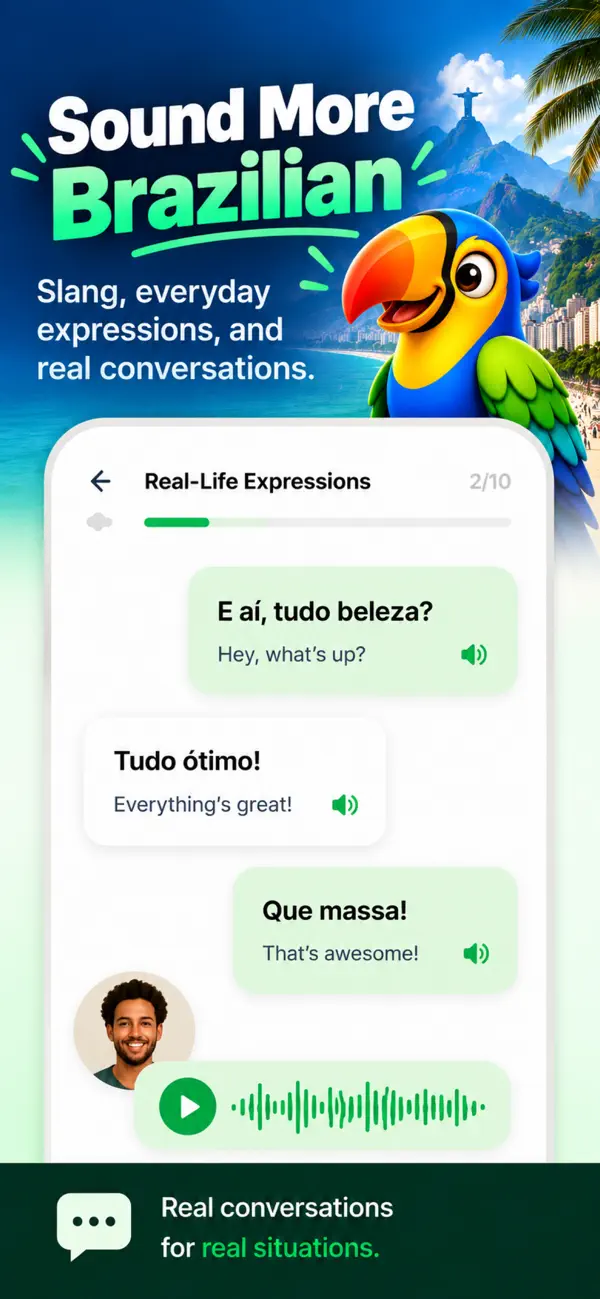
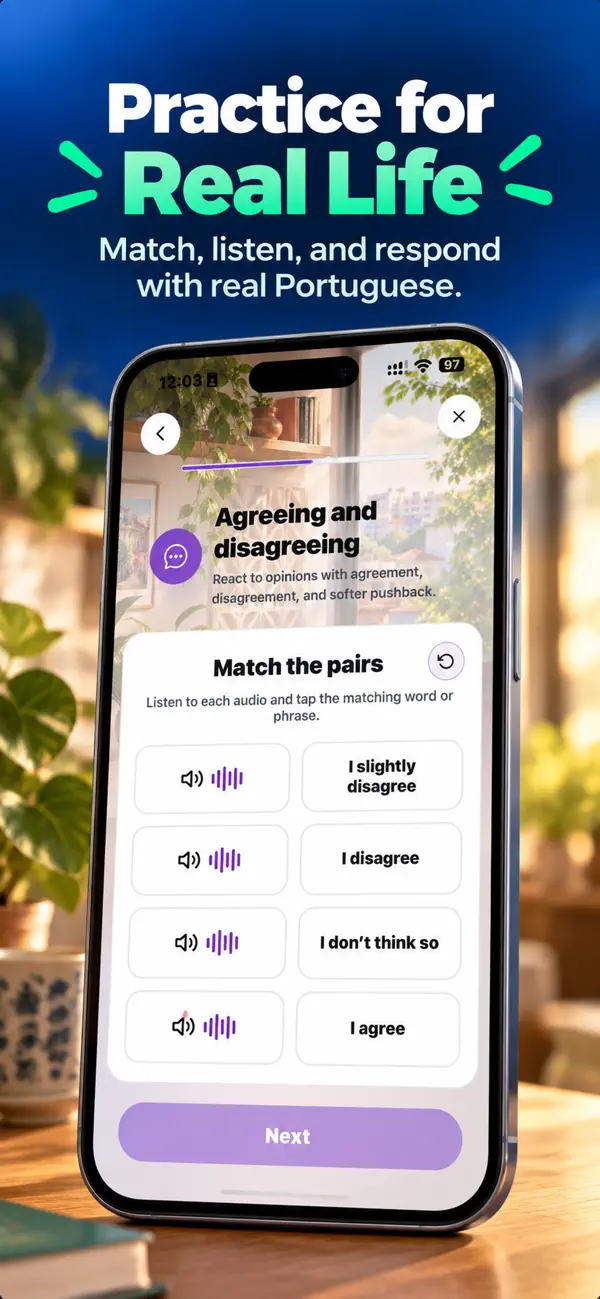
Choose one phrase you want to recognize faster, then hear it again in a different context. The Real Life Portuguese app offers everyday listening and expression practice. For personal feedback, book a trial lesson with the teaching team. The audio show is also available on Spotify.
Frequently asked questions
Is Brazilian Portuguese spoken too fast for learners?
There is no single speaking speed used by everyone. Everyday speech may feel fast when words connect, familiar sounds are reduced, or the topic and vocabulary are new. Repeated listening helps you recognize those patterns.
How do I test my Portuguese listening level?
Listen once for the main idea, then summarize what happened and name a few details you understood. Replay a short section and check what you missed. Understanding the message matters more than catching every word.
Should I use subtitles to practice listening?
Subtitles can help you check your understanding. Try listening first if that works for you, then use captions to confirm words and replay the audio. Keep captions on when they support accessibility.