Listen to a Portuguese Story: Love in Rio

By Bruno Lopes · Brazilian Portuguese teacher
Host of I Speak Portuguese · Updated
Meet Bruno and the teaching teamListen for meaning before individual words
A story gives you a sequence to follow. On your first listen, focus on the broad situation rather than stopping for every unfamiliar expression. A few details can help you keep your place even when you miss some vocabulary.
- First listen: note the general setting and the overall mood.
- Second listen: listen for who is involved, what changes, and what happens next.
- Third listen: replay one short passage and write down a phrase you recognize.
Check the episode player or its available notes for any transcript or study materials. This page is a companion exercise, not a substitute for the audio.
Notice how a story moves
Instead of translating every sentence, track a few cues that show how ideas fit together. These common connectors are original examples for practice, not quotations from the episode.
| Portuguese | Meaning | How it helps |
|---|---|---|
| no começo | at the beginning | Introduces the opening situation |
| depois | after / then | Moves to a later event |
| aí | then / and then | Connects events in informal speech |
| por isso | because of that | Signals a result |
| no final | in the end | Signals how the story concludes |
Practice relationship vocabulary in context
The title points to a romantic story. Here are useful everyday words to recognize when you study this topic; their meanings depend on context, and the examples below are not lines from the episode.
- conhecer alguém — to meet or get to know someone
- gostar de alguém — to like someone
- sair com alguém — to go out with someone; in context, to date someone
- ficar com alguém — to be romantically involved or kiss someone; the exact sense depends on context
- namorar — to be in a dating relationship
For a fuller explanation of how these terms differ, read our guide to dating words in Brazilian Portuguese.
Retell the story without a transcript
After listening, use these sentence starters to share only what you actually understood. Keep your retelling short and leave out details you are unsure about.
- A história acontece em... — The story takes place in...
- No começo... — At the beginning...
- Depois, aconteceu... — Then, ... happened.
- Acho que a pessoa se sentiu... — I think the person felt...
- No final... — In the end...
Use acho que (“I think”) when you are making an interpretation rather than repeating a detail you clearly heard. That distinction helps you stay accurate while speaking with limited vocabulary.
Turn your listening into speaking practice
- Listen once without pausing and write three words you recognize.
- Listen again and add one detail about the setting, people, or sequence.
- Retell the part you understood in three or four sentences using no começo, depois, and no final.
- Replay one passage and update your retelling only with details you can verify.
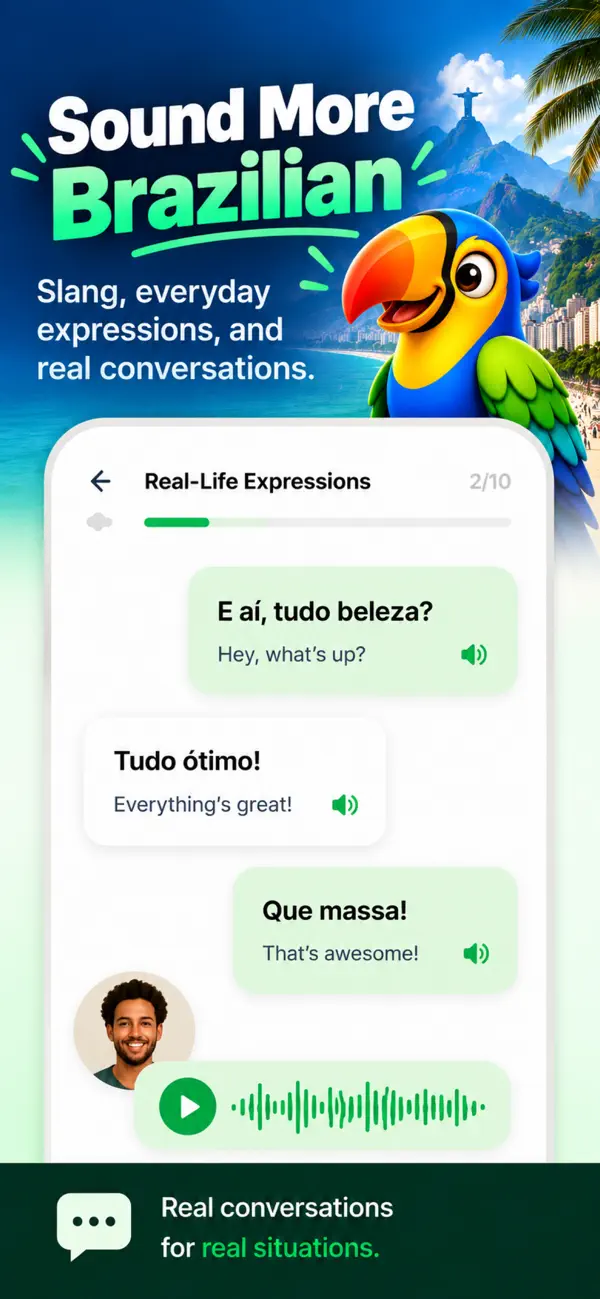
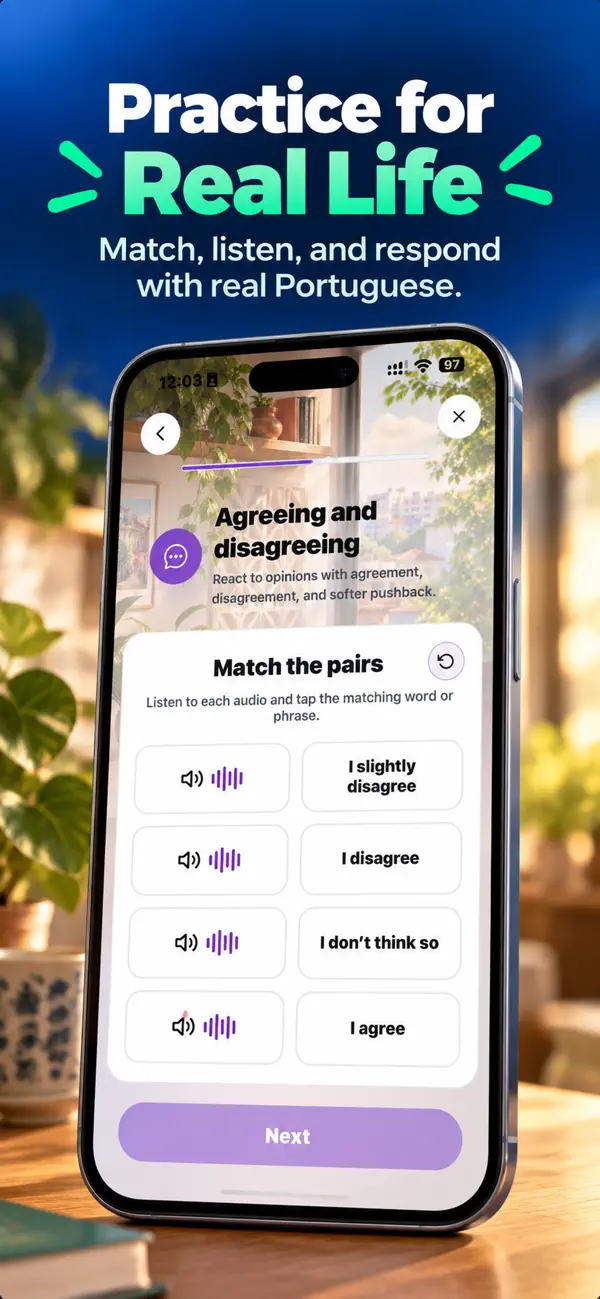
For more Brazilian Portuguese listening and phrase practice, explore the Real Life Portuguese app. To practice a story aloud with a teacher, see the trial lesson. You can also keep learning with other students in the I Speak Portuguese community.
Frequently asked questions
What is the Love in Rio Portuguese episode?
It is episode 19, titled Learn Portuguese with Stories #4 — Love in Rio. Apple Podcasts lists it as a nine-minute episode released November 22, 2024.
How should I listen to a Portuguese story as a learner?
Listen once for the general situation, listen again for people and events, then replay a short section and retell the main idea in your own words. You do not need to understand every word on the first pass.
Does this article include a transcript of Love in Rio?
No. It offers an original listening routine and original Portuguese examples; it does not claim to transcribe or summarize plot details from the episode.